Thinking about buying a condo or townhome in Red Bank? With a walkable downtown, river views, and a lively arts scene, it is easy to see the draw. At the same time, you want a clear picture of prices, HOAs, flood risk, parking, and financing before you act. This buyer’s primer gives you the Red Bank basics, live data sources to watch, and a practical checklist you can use from first tour to closing. Let’s dive in.
Why Red Bank condos appeal
Red Bank offers a compact, pedestrian-friendly core with restaurants, cafes, and venues clustered within a few blocks. The downtown business district is supported by Red Bank RiverCenter, which keeps a full calendar of events. Major cultural anchors like the Count Basie Center for the Arts and Two River Theater add year-round energy.
If you commute, Red Bank Station puts NJ TRANSIT service within minutes of many buildings. You can confirm current permit and daily parking details on NJ TRANSIT’s Red Bank Station page.
For context, U.S. Census QuickFacts lists Red Bank’s median owner-occupied housing value near $477,000 and an owner-occupied rate around 50.1 percent, reflecting a healthy mix of owners and renters in a compact borough. You can review the latest borough-level stats on U.S. Census QuickFacts.
What you can buy in Red Bank
Red Bank’s condo and townhome stock comes in three broad styles, each with its own feel and price rhythm.
Downtown lofts and conversions
You will see upstairs apartments and lofts above storefronts on and near Broad and Monmouth. These often have original details, efficient footprints, and immediate walk-to-dining appeal. Expect limited on-site parking and smaller associations.
Garden and mid-rise condos
Built largely in the 1980s and 1990s, these communities include garden-style buildings and modest elevator mid-rises. They usually offer assigned or lot parking, shared mechanicals, and moderate HOA fees.
Townhomes and duplex-style attached homes
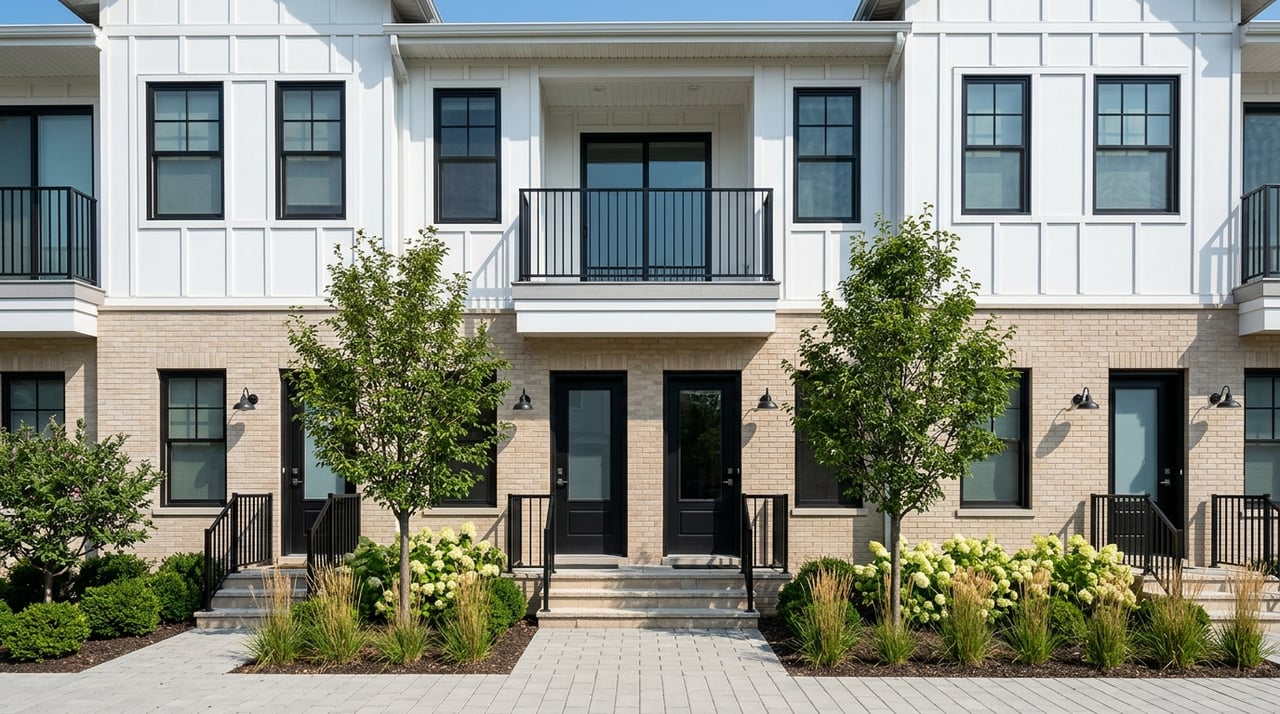
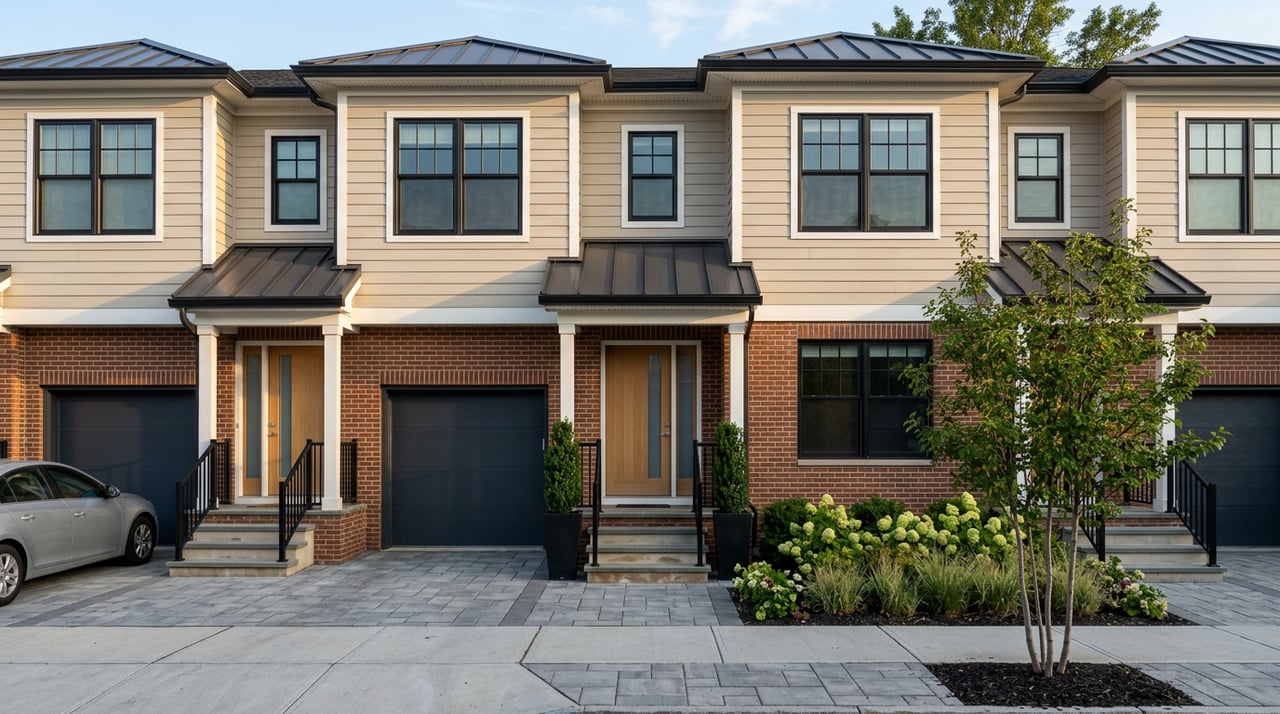
These fee-simple or condo-governed townhomes often provide private entries, garage or assigned parking, and in some cases river views and balconies. Riverfront addresses tend to command premium pricing.
Typical price ranges
Prices vary by building, location, finish level, and view. Recent Red Bank examples suggest:
- Garden-style and smaller 1–2 bedroom condos: low to mid $100Ks up to the mid $300Ks.
- Mid-range 2 bedroom condos and attached townhomes: roughly $400K to $700K.
- Riverfront townhomes and newer luxury condos: commonly $800K to $1M plus.
To frame the wider market, several aggregators reported the following as of Feb 2026: a citywide median sale price near $565,000 (Redfin), an average home value near $685,000 (Zillow’s ZHVI), and a 07701 median list price near $499,000 with a zip-level median rent around $3,300 (Realtor.com). Different providers use different methods and geographies, so treat these as directional. Day-of pricing always depends on the specific building and unit you are considering.
Amenity tiers and monthly fees
HOA services and fees vary. Match the level of service to the way you plan to live.
- No-frills associations: Small HOA focused on exterior maintenance. Lower monthly assessments and limited reserves. Good if you want lower carrying costs.
- Mid-tier complexes: Enclosed or gated parking, in-building laundry, a small gym or common room. Moderate fees and a reserve fund are common.
- Full-service riverfront or luxury buildings: Assigned covered parking or a garage, elevators, secure storage, and sometimes a concierge. Expect higher HOA fees, often several hundred dollars per month, reflecting broader services.
How to read the market data
Because Red Bank is small and diverse by housing type, broad stats can mask micro-markets. When you zero in on a building, compare like-for-like units by size, level, view, and recent renovations. For a quick reality check, pair three sources:
- Building-level comps from the local MLS for recent sales in the same community.
- Borough-level context from U.S. Census QuickFacts to understand owner-occupancy and value baselines.
- Your lender’s take on the project’s eligibility and any underwriting constraints.
HOA documents to review
Before you make an offer, ask for the core association documents and scan them for clarity on costs, rules, and upcoming projects. A helpful lender resource that explains why underwriters request these items is Fannie Mae’s project standards overview. Request:
- Current budget and most recent financial statements
- Reserve study
- Board meeting minutes from the last 12 to 24 months
- Rules and regulations, bylaws, and declaration
- Master insurance declarations and coverage limits
- Any pending or recent special assessments
- Rental policy and current owner-occupancy ratio
- Delinquency rates for dues and any pending litigation
Resale certificates in New Jersey
In New Jersey practice, the association typically prepares a resale package, often called a resale certificate or resale disclosure package. It includes many of the items above plus a certificate of unpaid assessments. Sellers often pay for the package, although contracts can shift costs. Buyers should expect this packet to be ordered once a contract is accepted. For a plain-language overview, see this guide to New Jersey resale certificates.
Insurance basics you should confirm
There are two parts: the building’s master policy and your HO-6 unit policy. Ask for the master policy declarations, confirm what the association covers versus what you must insure inside your walls, and whether any deductibles or perils shift to owners after a claim. If your building is near the river or in a designated flood zone, ask your lender and insurance agent about flood requirements. Lenders weigh project insurance when approving loans, which is why Fannie Mae’s guidelines matter.
Parking and commuting: what to expect
Downtown Red Bank blends on-street meters, municipal lots, and NJ TRANSIT commuter lots. The Borough publishes public parking permits and meter details, including current municipal lot permits at approximately monthly $180, 6 months $500, and annual $1,000. Review current rules on the Borough’s parking page.
If you plan to park at the train, NJ TRANSIT’s Red Bank Station page lists commuter-lot locations, permit pricing and hours. Several lots note that evenings and weekends are free, and that some are free after a set morning hour. Always confirm current terms before you buy a permit.
Walkability and lifestyle
If you want to leave the car at home, Red Bank makes it easy. Many condo and townhome communities sit within a few blocks of restaurants, coffee, fitness studios, and the arts. Browse upcoming events through Red Bank RiverCenter and check show schedules at the Count Basie Center for the Arts. When you tour, walk the block at different times of day to gauge noise, lighting, and foot traffic that match your preferences.
Flood risk and resilience
Red Bank sits on the Navesink River, so flood due diligence is essential, especially for riverfront or low-lying buildings.
- Check the property’s flood zone by entering the address at the FEMA Flood Map Service Center.
- Ask the seller or HOA for any elevation certificate and recent engineering reports if bulkheads or drainage work have been done.
- Review local context in the Monmouth County Hazard Mitigation Plan’s Red Bank appendix, which outlines known risk areas and mitigation projects. You can read it here: Monmouth County Hazard Mitigation Plan — Red Bank.
Flood status can affect insurance costs, lender requirements, and long-term maintenance planning in waterfront communities. Build this into your timeline and budget.
Taxes and monthly carrying costs
To estimate property taxes at a high level, pair the county and borough averages. The New Jersey Division of Taxation’s 2024 report lists Monmouth County’s average residential tax bill around $10,930. The same year, Red Bank’s average residential assessed value was about $538,210. That implies an effective rate near 2.0 percent based on this example math: 10,930 divided by 538,210 is approximately 0.0203. See the report here: NJ Division of Taxation — Average Residential Taxes.
Use this only as a directional estimate. Always pull the specific property’s tax bill and ask the municipal tax collector about payment timing and any reassessment plans.
Financing and project eligibility
Your loan options can depend on the building as much as your credit profile. Lenders review condo associations for eligibility and risk. A project that meets agency standards is often called warrantable. Factors include reserves, owner-occupancy ratios, insurance limits, pending litigation, and the share of commercial space. If a project is not preapproved by FHA or does not meet certain agency standards, you can usually still finance it with a conventional or portfolio loan, but documentation and timelines may change.
For a simple explainer you can share with your lender, see Fannie Mae’s project standards overview. Ask your lender about project eligibility early so you can tailor your offer strategy to your financing path.
Quick guidance by buyer type
- First-time buyers: Prioritize warrantability, reasonable HOA fees, and proximity to transit.
- Downsizers: Look for single-level layouts, elevators, storage, and low-maintenance exteriors near daily needs.
- Investors: Confirm rental rules in the declaration and bylaws. For context, 07701 median rents have been reported near $3,300 at the zip level in recent snapshots. Always build your own comp set from current listings and recent leases.
Your final due-diligence checklist
Use this quick list to stay organized from first tour to closing.
- Request the full resale package or resale certificate, including the certificate of unpaid assessments. Read a plain-language overview of the process here: New Jersey resale certificates.
- Review association financials: current budget, reserve study, recent board minutes, and any special assessments with purpose and timeline. Lenders ask for these items based on Fannie Mae’s project review standards.
- Confirm insurance: master policy declarations, owner-responsibility for deductibles, and whether flood insurance is required or recommended.
- Check litigation and management: any pending lawsuits, the management contract, and whether a developer still controls the board in newer projects.
- Verify parking and storage: deeded spots, assigned spaces, guest rules, and municipal context. Borough permit and meter info is on the Red Bank parking page.
- Confirm lender eligibility early: ask whether the project is considered warrantable or if FHA/VA options exist. Your lender will outline documentation needs based on Fannie Mae’s guidelines.
- For waterfront or low-lying units: check the FEMA flood map, request elevation certificates if available, and ask for any recent engineering reports related to waterfront or drainage work.
How we can help you buy with confidence
You deserve a clear plan and a calm path to closing. As a locally rooted team serving Red Bank and the Monmouth County shore, we combine neighborhood insight with modern, high-touch service. We will help you compare buildings, read HOAs, coordinate a lender-backed project review, and model total monthly costs. If you want pricing clarity before you tour, we provide human-driven valuations within 24 to 48 hours and tailor comps to your exact building type and floor plan.
If you are considering a riverfront townhome, a downtown loft, or a garden condo, let’s talk about timing, financing, and the right offer strategy for this market. Start your plan with Todd Katz.
FAQs
What does a “warrantable” condo mean in Red Bank financing?
- It is a building that meets lender and agency standards for reserves, insurance, owner-occupancy, and other factors, which can expand your loan options per Fannie Mae’s project standards.
Are riverfront Red Bank condos in a flood zone, and how do I check?
- Some are, so enter the property address at the FEMA Flood Map Service Center and ask for an elevation certificate before you finalize insurance or financing.
How much are typical HOA fees for Red Bank condos?
- Fees vary by service level: no-frills associations are lower, mid-tier are moderate, and full-service riverfront or luxury buildings can run several hundred dollars per month due to broader amenities.
What are 2026 price expectations for Red Bank condos and townhomes?
- Recent snapshots show garden and smaller units from the low to mid $100Ks into the mid $300Ks, mid-range options around $400K to $700K, and riverfront or luxury inventory often $800K to $1M plus.
How does parking work if my building lacks a garage?
- Many buyers use assigned lot spaces or nearby municipal lots; review permits and meter details on the Borough parking page and check NJ TRANSIT’s station page if you plan to park for the train.
Which documents should I review before I submit an offer on a Red Bank condo?
- Ask for the resale certificate, budget, reserve study, recent minutes, master insurance declarations, rental policy, and any special assessments, then confirm your lender’s documentation per Fannie Mae’s guidelines.